Bernese Mountain Dog Training: Complete Guide
Bernese Mountain Dog training works best when it is early, gentle, and consistent. Berners are intelligent, eager to please, and deeply bonded to their people, which makes them very trainable — but they are also sensitive souls who wilt under harsh corrections and thrive on praise and rewards. Whether you are house-training a new puppy or teaching obedience to an adult, this guide walks you through how to train a Berner using positive, relationship-based methods that bring out the breed's naturally cooperative nature.
By BerneseLife Team · 9 min read · Updated September 2026
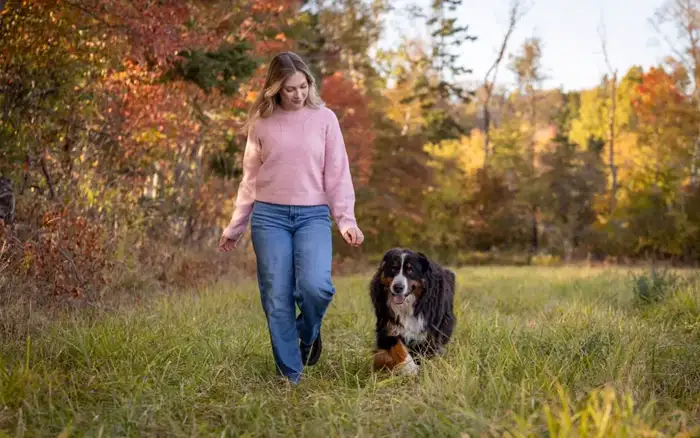
Are Bernese Mountain Dogs easy to train?
A frequent question is "are Bernese Mountain Dogs easy to train," and the answer is generally yes — with a caveat. Their intelligence and desire to please you make them quick learners, especially when training feels like a rewarding game. The caveat is their sensitivity: Berners do not respond well to yelling, physical corrections, or heavy-handed methods, which can cause them to shut down or become anxious. Some individuals also have a mild stubborn or slow-to-mature streak, so patience matters. Stick with reward-based training and you will find the breed a willing, capable student.
Start with socialization
The most important early training tips for a Berner have nothing to do with commands — they are about socialization. During the critical window of roughly 8–16 weeks, expose your puppy to a wide variety of people, dogs, sounds, surfaces, and everyday situations in a positive, low-stress way. Because Berners can be naturally reserved with strangers, thorough early socialization is what keeps that reserve from tipping into shyness or fearfulness. Puppy socialization classes are excellent for this and double as a foundation for obedience.
Positive reinforcement: the right approach
The core of effective how to train a Berner is positive reinforcement — rewarding the behavior you want with treats, praise, toys, or play so your dog is motivated to repeat it. Keep these principles in mind:
- Reward generously and immediately so the dog connects the reward with the behavior.
- Keep sessions short and upbeat — 5–10 minutes, several times a day, holds attention better than long drills.
- Be consistent with cue words and rules across the whole household.
- End on a win so your dog finishes each session confident and eager for the next.
Harsh discipline backfires with this breed; a gentle, encouraging tone gets far better results.
Potty training a Bernese Mountain Dog
To potty train a Berner puppy, rely on structure and consistency. Take your puppy out first thing in the morning, after meals, after naps, after play, and before bed, plus roughly every two hours in between. Choose a consistent potty spot, use a cue word, and reward lavishly the moment your puppy finishes outside. Supervise closely indoors and clean any accidents with an enzymatic cleaner to remove the scent. Young puppies have limited bladder control, so expect the process to take several weeks of patient repetition.
Crate training
Crate training gives your puppy a safe den, aids house-training, and prevents destructive chewing when you cannot supervise. Introduce the crate gradually and positively: feed meals inside it, toss in treats and toys, and never use it as punishment. Start with very short closed-door sessions and build up slowly. Because Berners are prone to separation anxiety, a properly introduced crate that the dog views as a comforting space — not a prison — can actually help reduce anxiety when used correctly.
Teaching basic obedience
A practical obedience guide for Berners covers the essentials that make daily life smooth and safe:
- Name recognition and attention — the foundation for everything else.
- Sit and down — easy early wins that build confidence.
- Come (recall) — potentially lifesaving; always reward, never punish, a dog that comes to you.
- Stay and wait — useful for a large dog around doors, cars, and guests.
- Loose-leash walking — important early, because an 80–115-pound adult that pulls is hard to manage.
- Leave it and drop it — for safety around food, objects, and hazards.
Because Berners grow large, teaching polite manners like not jumping up while they are still small pays off enormously.
Keeping training positive long-term
Training does not end with puppy class. Keep reinforcing good behavior throughout your dog's life, and channel that working heritage with mentally engaging activities — obedience, rally, tracking, or even cart-pulling, which the breed was originally bred to do. Mental work tires a Berner as effectively as physical exercise and strengthens your bond. Pair training with regular activity from our exercise needs guide for a calm, well-rounded dog.
Frequently asked questions
Are Bernese Mountain Dogs easy to train?
Generally yes — they are smart and eager to please — but they are sensitive and respond best to gentle, positive methods rather than harsh corrections.
When should I start training my Bernese Mountain Dog?
Begin the day you bring your puppy home. Early socialization (8–16 weeks) and basic manners are far easier to instill early than to fix later.
How do I potty train a Bernese Mountain Dog puppy?
Use a consistent schedule and spot, take the puppy out frequently, reward success immediately, supervise indoors, and clean accidents with an enzymatic cleaner.
Are Bernese Mountain Dogs stubborn?
Some can be a little stubborn or slow to mature, but consistent, reward-based training and patience overcome this in most dogs.
Can Bernese Mountain Dogs be trained off leash?
With a reliable recall built through positive training, many can — but their size and reserve mean off-leash freedom should only follow solid, proofed obedience.
Related reading: Complete Breed Guide · Temperament & Personality · Puppies Guide · Exercise Needs